
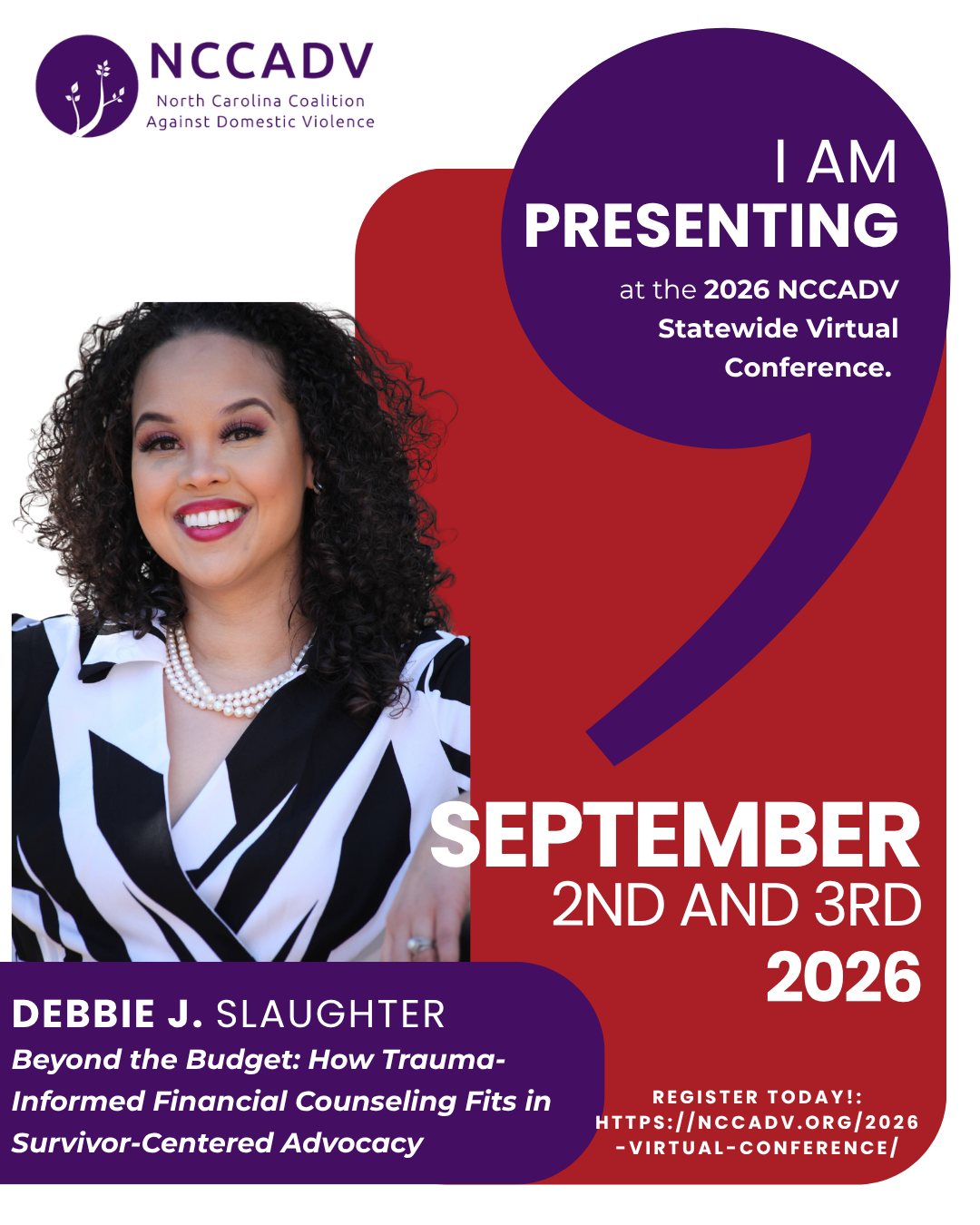
This session introduces trauma-informed financial counseling as that missing allied partnership. Trauma-informed financial counseling applies behavioral finance and financial psychology to the realities survivors face: why a survivor may avoid opening mail or checking a bank balance, why scarcity narrows decision making at exactly the moment big decisions are required, and why shame around money keeps survivors from disclosing financial abuse to the advocates trying to help them.
Within housing and shelter, attendees will examine how financial trauma shapes shelter exit planning, lease applications, and landlord interactions, and how financial barriers quietly undermine housing stability even after a survivor is safe. Within mental health, attendees will learn to recognize money related stress, avoidance, and shame as predictable behavioral responses to financial abuse rather than poor money habits, and to respond in ways that build confidence instead of compliance.
Within leadership, attendees will leave with a practical framework for vetting and building partnerships with financial professionals, including questions to ask and red flags to avoid, so the financial response to domestic violence is survivor centered rather than budget centered. Attendees leave with concrete language, immediate practice shifts, and a partnership roadmap they can act on the week they return to their agencies.
Register today to view this session at https://nccadv.org/2026-virtual-conference/
